Industrial
Fastener Sourcing for the Data Center Buildout: Beyond Server Rack Hardware
Server rack hardware gets attention as the visible face of data center infrastructure. It's also a small fraction of the fastener demand generated by data center construction. The electrical infrastructure surrounding the IT equipment (power distribution, backup power, environmental controls, monitoring, security) drives enormous fastener demand across dozens of electrical OEM product categories. For every rack of servers deployed, there are transformers, switchgear, PDUs, UPS assemblies, cooling controls, and monitoring cabinets that had to be manufactured, shipped, and installed by the time the IT load came online.
The current wave of data center construction is unprecedented in scale. Amazon, Microsoft, Google, and Meta collectively plan to spend $725 billion on capital expenditure in 2026, up 77% from 2025. Approximately 75% of that spending is tied to AI infrastructure, and the majority of it flows through electrical equipment supply chains before reaching the visible IT layer. For electrical equipment OEMs supplying this market, the sourcing decisions inside each assembly matter more than they have in decades.
This is a practical look at the electrical equipment supply chain feeding the data center buildout, and how those market pressures shape fastener specifications. It's a companion to our analysis of server rack hardware and A2/A4 stainless requirements and completes the electrical OEM vertical set alongside our solar and wind and battery storage articles.
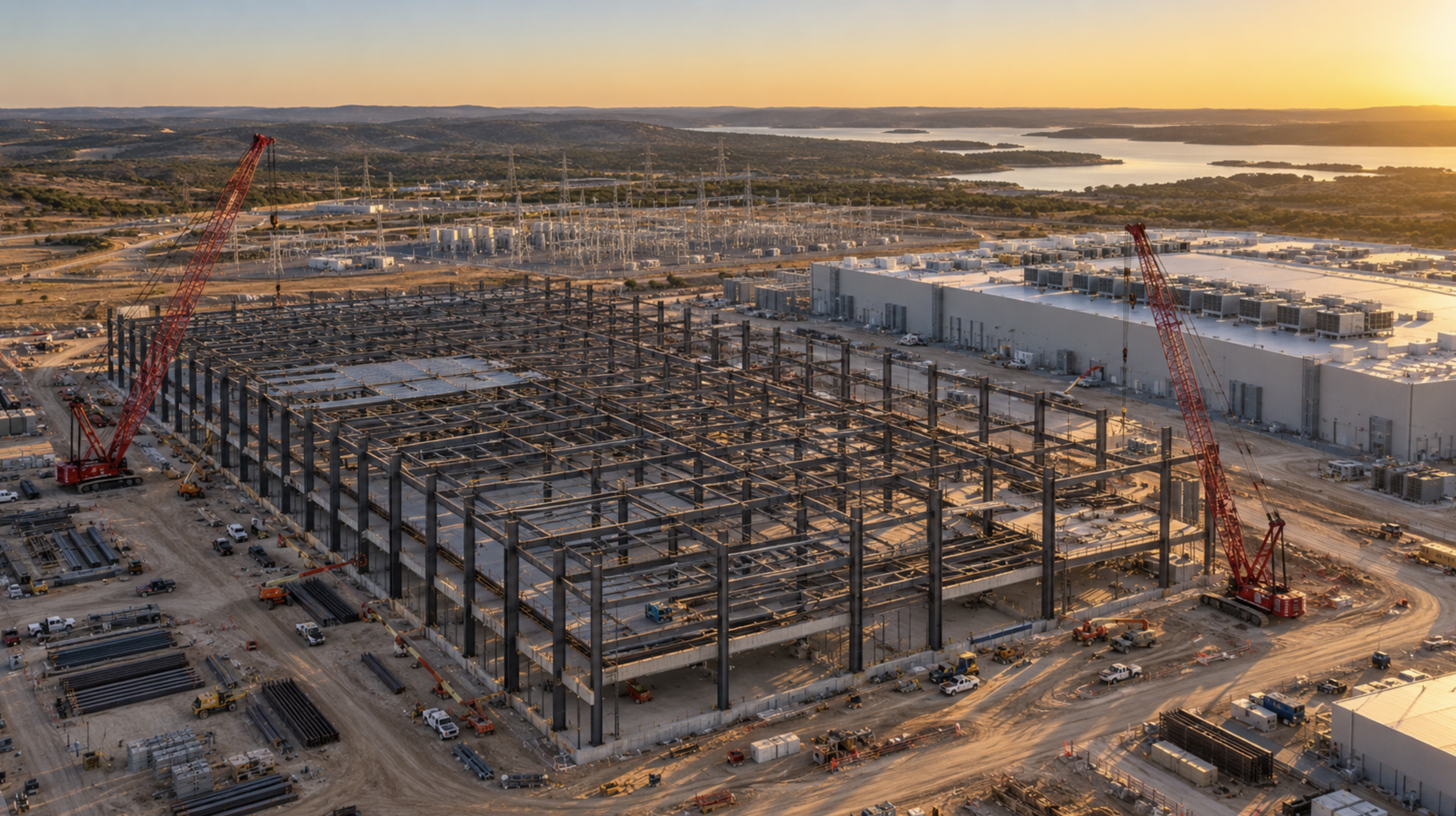
The Scale of Data Center Electrical Equipment Demand
The numbers driving data center construction in 2026 are unlike anything the electrical equipment industry has seen. Amazon alone projects $200 billion in capital expenditure for 2026, most of it flowing to digital infrastructure. Google guides $175 to $185 billion, Meta $115 to $135 billion, and Microsoft $110 to $120 billion. Combined big four hyperscaler capex has roughly tripled from $226 billion in 2024 to $410 billion in 2025 to a projected $725 billion in 2026.
The power infrastructure implications are equally dramatic. U.S. data center power demand is forecast to climb from 31 gigawatts in 2025 to 41 gigawatts in 2026, according to Goldman Sachs Research, and to 66 gigawatts by 2027. Global data center power demand is expected to reach 132 gigawatts in 2026, up 27% from 104 gigawatts in 2025, per Gartner. Data centers already consume 176 terawatt-hours annually in the U.S., accounting for approximately 4.4% of U.S. electricity, and forecasts show that share climbing to 9-12% by 2030.
Behind those power numbers is an enormous electrical equipment supply chain. Every megawatt of data center IT load requires proportional power distribution, backup generation, thermal management, and monitoring equipment. AI-optimized racks now require 50 to 100 kilowatts each compared to 5 to 10 kilowatts for traditional server racks, and that density change ripples through every category of supporting electrical equipment. More than 2,100 U.S. data centers are currently operational, with 620+ additional facilities under construction or planned across 47 states.
The bottleneck for the industry isn't chip supply. It's power infrastructure. Only 50-60% of scheduled data center capacity is expected to come online on time, largely because electrical equipment supply chains and grid interconnection processes cannot keep pace with the buildout schedule. For electrical OEMs supplying this market, sourcing reliability has become the constraint that determines project success.
The Electrical Equipment Behind Data Center Infrastructure
Data centers are built from dozens of electrical equipment categories, each manufactured by electrical OEMs and each dense with fasteners.
- Power Distribution Units (PDUs). Rack-level and floor-level PDUs distributing power to IT equipment. Modern high-density deployments deploy hundreds of PDUs per facility.
- Automatic Transfer Switches (ATS). Switching between utility and backup power sources. Multiple ATS units per facility, each in its own outdoor or indoor rated enclosure.
- Uninterruptible Power Supply (UPS) enclosures. Battery-backed power protection at the row and facility level. Static UPS and rotary UPS systems both require substantial enclosure hardware.
- Medium-voltage switchgear. Utility interconnection and internal power distribution across the campus.
- Backup generator switchgear and control panels. Standby power management for diesel and gas generators.
- Battery cabinets and BMS enclosures. UPS battery strings, both VRLA and increasingly lithium-ion, requiring dedicated enclosures and monitoring.
- Cooling equipment enclosures. CRAC, CRAH, chilled water plant controls, and increasingly liquid cooling infrastructure driven by AI rack densities.
- Building Management Systems (BMS) cabinets. Environmental monitoring, control, and automation across the facility.
- DCIM (Data Center Infrastructure Management) enclosures. Real-time monitoring, capacity management, and reporting hardware.
- Fire suppression control panels. Detection and suppression system controls, particularly critical in high-density AI zones.
- Physical security cabinets. Access control, video management, intrusion detection at the facility perimeter and internal zones.
- Substation and transformer hardware. Utility interconnection cabinets, medium-voltage switchgear, and protection relay panels at the campus substation.
Each product category has its own design rules, certification path, and fastener count. A single hyperscale campus at 100+ megawatts contains thousands of these electrical assemblies. Multiplied across the U.S. buildout, this creates a sustained demand signal for engineered fasteners that is unlikely to plateau before 2030.
Why Data Center Sourcing Is Different
Sourcing electrical equipment for data center applications is not the same as sourcing for a factory floor or utility installation. Four pressures make this environment distinct.
Uptime expectations tied to SLA financial penalties. Data centers commit to 99.99% or higher uptime SLAs. Every component decision, including fastener specifications, indirectly supports uptime by preventing preventable failures. Data center downtime carries direct financial penalties measured in tens of thousands of dollars per minute for critical customers. Component costs are trivial compared to downtime costs, which means that data center OEMs and their fastener suppliers work under different economics than typical industrial applications.
Rapid deployment scale outpacing electrical construction supply chains. Hyperscale operators are building faster than the electrical construction industry can supply. Time from project announcement to commercial operation has compressed to 18 to 30 months for many hyperscale campuses, less than half the traditional utility construction timeline. Electrical OEMs supplying this market face compressed manufacturing timelines that traditional utility procurement doesn't experience, and their component sourcing needs to match this pace.
Standardized specifications with limited tolerance for variation. Hyperscale operators drive toward standardized designs across campuses to reduce engineering, procurement, and operations complexity. Their electrical OEMs face intense pressure for specification consistency across large production volumes. A fastener that varies from lot to lot in torque behavior or corrosion performance creates operational problems that hyperscale customers don't tolerate.
Environmental sensitivity of high-density equipment. AI workloads pack enormous power density into small footprints, with individual racks now drawing 50-100 kilowatts. Thermal management, electromagnetic interference shielding, and airflow considerations affect fastener specifications in ways that traditional industrial equipment doesn't. Fasteners near high-current bus bars need to handle both electrical loading and thermal cycling. Fasteners in EMI-shielded enclosures need to maintain gasket compression across service life.
How These Pressures Shape Fastener Specifications
Each pressure translates into a specific fastener choice.
Material selection for high-reliability applications. 304 stainless minimum for internal PDU and switchgear hardware, 316 for coastal installations or aggressive environments. Alloy steel (4140, A574 socket head cap screws) for high-strength structural applications inside power equipment. Precipitation-hardened stainless where both corrosion resistance and strength matter. For a detailed look at material selection across applications, see our complete guide to fastener materials.
Coating selection for long service intervals. Standard zinc plating is adequate for indoor conditioned space in most data center applications. Zinc-nickel or better for equipment near cooling systems where humidity exposure is elevated. Xylan and Geomet for high-temperature or high-humidity zones, and increasingly for high-current bus bar connection hardware where thermal cycling is severe. For a full comparison, see our comparison of fastener coating options.
Torque control for high-current connections. Bus bar fasteners, cable lug terminations, and DC power connections have strict torque specifications for reliable electrical contact. Loose bus bar connections at data center current levels generate heat, damage insulation, and can start fires. Controlled-friction coatings support consistent torque-to-preload behavior across large installed populations, which matters when a hyperscale campus deploys thousands of similar connections.
Vibration considerations for rotating equipment. UPS batteries in service produce minor vibration, cooling equipment generates constant vibration from fans and pumps, and generators create substantial vibration during test cycles. Thread-locking mechanisms, prevailing-torque nuts, and controlled-friction coatings support fastener retention across long service intervals in equipment that gets minimal maintenance attention.
Documentation for warranty support over 15-20 year equipment lifecycles. Data center electrical equipment carries long service life expectations. Material certifications, dimensional inspection reports, and coating verification enable root cause analysis years after installation. Missing documentation from initial manufacturing creates unresolvable problems when warranty issues emerge at year 12.
Consistency across large production volumes. Hyperscale-supplying OEMs need fasteners that behave consistently lot to lot. Torque-to-preload spread that would be acceptable in traditional industrial applications becomes a systematic problem when the OEM is delivering thousands of nominally identical assemblies to a hyperscale customer.
How ZOAG Serves Data Center Electrical OEMs
ZOAG manufactures custom per-print fasteners for industrial OEMs, including electrical equipment manufacturers producing PDUs, ATS assemblies, UPS enclosures, switchgear, and other data center infrastructure equipment. Material and coating specifications are matched to the internal and external environmental conditions the equipment will experience, including high-current applications, thermal cycling zones, and equipment adjacent to cooling infrastructure. Documentation accompanies every lot, including material certifications, dimensional inspection reports, and country-of-origin records.
Standard lead time is approximately 120 days from quote approval. ZOAG's sourcing footprint is global, so production can be placed where the specification, schedule, tariff position, and compliance requirements align most effectively.
If you are an electrical OEM supplying data center construction and want to review a print, request a quote.
Frequently Asked Questions
What kinds of electrical equipment go into data centers beyond server racks?
The category includes Power Distribution Units (PDUs), Automatic Transfer Switches (ATS), Uninterruptible Power Supply (UPS) enclosures, medium-voltage switchgear, backup generator switchgear and control panels, battery cabinets and BMS enclosures, cooling equipment enclosures, Building Management Systems (BMS) cabinets, DCIM enclosures, fire suppression control panels, physical security cabinets, and substation hardware. Each is built by electrical equipment OEMs and installed at the data center site.
Why do data center applications require different fastener specifications?
Four forces make data centers different: 99.99%+ uptime SLAs with substantial financial penalties for downtime, compressed OEM delivery schedules matching hyperscale construction pace, standardized specifications requiring consistency across large production volumes, and environmental sensitivity from high-density AI equipment. Those forces shape material grade, coating choice, torque control consistency, and documentation requirements.
How does high-density power distribution affect fastener specification?
High-density power distribution generates significant heat at electrical connections, drives thermal cycling in equipment near cooling systems, and creates strict torque specification requirements for bus bar and cable lug connections. Fasteners in these applications typically require controlled-friction coatings for consistent torque-to-preload behavior, high-temperature coatings for thermal stability, and often specialty materials for combined electrical, thermal, and mechanical loading.
What material grades are appropriate for data center electrical equipment?
304 stainless is the practical floor for most internal data center electrical equipment. 316 stainless is appropriate for coastal installations or aggressive environments. Alloy steel (4140 or A574 socket head cap screws) is common for high-strength structural applications inside power equipment. Precipitation-hardened stainless (17-4 PH) is specified where both corrosion resistance and strength matter, particularly in high-current DC applications.
How does the AI infrastructure buildout affect fastener sourcing?
AI workloads require racks drawing 50-100 kilowatts each compared to 5-10 kilowatts for traditional server racks. That density increase ripples through every category of supporting electrical equipment: bigger PDUs with more current-carrying fasteners, more UPS capacity per unit of IT load, denser cooling infrastructure, and higher-current bus bar connections throughout. The AI buildout has accelerated demand for engineered fasteners in data center electrical equipment and increased the specification requirements for high-current, high-temperature applications.
Sources
- Goldman Sachs Research, US Data Center Power Demand Forecast, 2026
- Gartner, Data Center Power Consumption Forecast, June 2026
- U.S. Energy Information Administration, Annual Energy Outlook 2026
- International Energy Agency, Energy and AI Executive Summary, 2026
- JLL, 2026 Global Data Center Outlook
- Hyperscale operator earnings disclosures (Amazon, Microsoft, Alphabet, Meta), Q4 2025 and Q1 2026
- Energy Institute, Statistical Review of World Energy 2026
- Lawrence Berkeley National Laboratory, United States Data Center Energy Usage Report