Data Centers
Why 100 GW of New Data Center Capacity Will Reshape Electrical OEM Sourcing
AI workloads are turning data centers into the most aggressive build cycle industrial supply chains have seen in decades. The projects are large, schedules are tight, and the cost of delay is high.
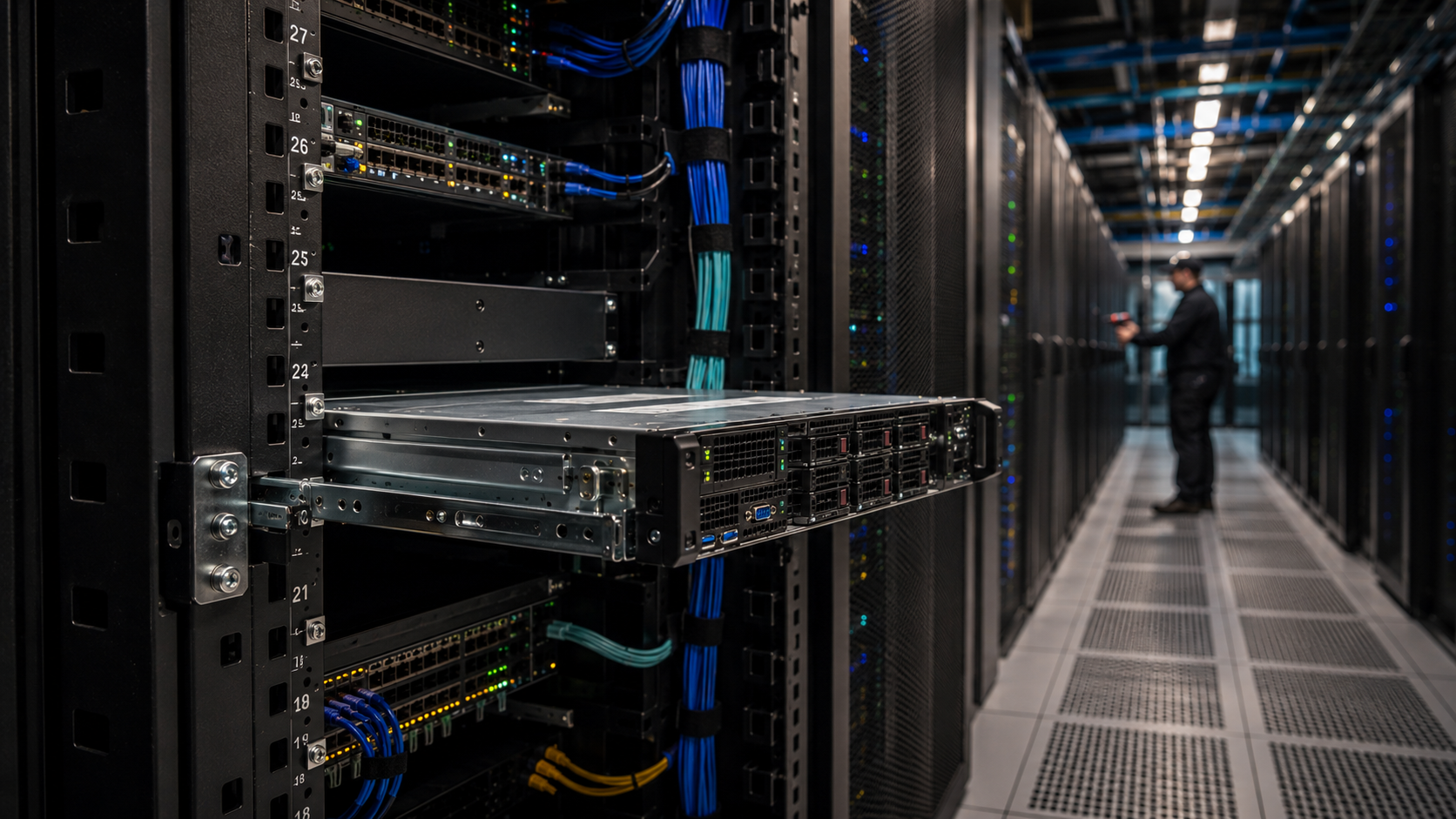
That demand does not stop at the data center fence line. It flows through the electrical OEMs that build the assemblies installed inside these facilities. Those OEMs are now being asked to quote, build, and ship on timelines that leave little room for procurement mistakes.
Small parts have become big decisions. Component sourcing has moved from tactical to strategic, and fasteners are a clear example. Buying the wrong fastener, or buying the right fastener from the wrong source, doesn't just cost you a small price variance. It introduces schedule risk, quality risk, and customer risk across the build.
The Scale of What's Being Built
100 GW of new data center capacity is expected to come online by 2030 (JLL 2026 Data Center Outlook). That is a sustained surge that pulls material, labor, and factory capacity forward, then keeps pulling.
The spend signals match the physical build. The global data center market is projected to grow from 258 billion USD in 2025 to 524 billion USD by 2035 (Precedence Research 2026). In parallel, AI-driven power demand is expected to surge 165 percent by 2030 (Goldman Sachs AI Infrastructure Report). More power demand means more electrical infrastructure inside the building, and more fabricated assemblies that need to be built, inspected, reworked, shipped, and serviced.
Geography matters because it shapes lead times and qualification paths. The Americas will account for approximately 50 percent of total new data center capacity (JLL 2026). In the United States specifically, data center construction starts hit 77.7 billion USD in 2025, a 190 percent year over year increase (ConstructConnect 2026). At the same time, data center construction costs are rising approximately 7 percent per year (JLL 2026 Data Center Outlook). That cost pressure forces everyone to build faster and avoid surprises. It also makes supplier performance, not just supplier price, the center of sourcing decisions.
Tariff pressure adds another layer to the sourcing equation. Following the February 2026 U.S.-Taiwan trade agreement, Taiwan-sourced derivative goods are capped at a 15 percent maximum tariff, while China-sourced fasteners face stacked Section 232 and Section 301 exposure that can exceed 50 percent. Country of origin has become a strategic variable, not a shipping detail. For a full breakdown, see our analysis of Section 232 tariffs and per-print sourcing.
Why This Hits Electrical Equipment OEMs Hardest
Electrical equipment manufacturers sit in the middle of this build cycle. They have to translate a customer's schedule into finished assemblies, then hold that schedule intact while demand shifts underneath them. That's difficult in a stable market. In this one, it's unforgiving.
Compressed timelines change the sourcing posture. The window for quoting, supplier qualification, and first-article feedback is shorter. Releases come earlier, sometimes before designs feel fully settled. Engineering changes still happen, but they happen on top of production, not before it. That creates a familiar pattern: more revisions, more part number churn, more pressure to keep the line running anyway.
Fasteners are exposed to this in a way that's easy to underestimate. Fasteners show up everywhere in data center electrical equipment, and they show up in high counts per assembly. They also sit at the intersection of drawing control and manufacturing reality. A fastener is never just a diameter and a length. It's material, thread class, head geometry, drive, coating, friction, and how that stack-up behaves in your torque process. When component decisions are being made faster and with less margin for error than ever, the burden of proof shifts. Procurement can't assume the fastener is a commodity. It has to be treated as a controlled part.
Rising input costs make this worse, because teams are tempted to chase piece price. The problem is that the true cost isn't in the unit price. It's in the failure modes that show up later, after you've committed capacity and promised a ship date.
Why Fastener Sourcing Is Now Strategic
In a normal market, small procurement mistakes get absorbed. The line reworks, the schedule slips a few days, everyone moves on. In the current buildout pace, that absorption capacity has evaporated. Every OEM in the electrical equipment supply chain is running closer to capacity, with tighter customer commitments and less room to recover from a bad component decision. (For a detailed breakdown of how a wrong fastener actually costs an OEM plant, see our analysis of component sourcing under labor pressure.)
This is why electrical equipment manufacturer sourcing is changing. In a constrained market, you're not just sourcing parts. You're sourcing certainty. The sourcing decision needs to answer basic operational questions:
- Can you get the exact print requirement, not a near match?
- Can you keep the same spec through revisions without drifting to an uncontrolled alternate?
- Can you trace lots quickly when something looks off?
- Can you adjust order cadence without losing your place in the supplier's production plan?
For many OEMs, the answer is custom per-print fasteners. Per-print sourcing aligns the supply base to the drawing and keeps the supplier accountable to the spec. Instead of treating fasteners like replenishment items that can always be bought later, procurement can time buys to the build schedule, lock down critical specs early, and carry the right buffers. That stabilizes the electrical OEM supply chain because it removes one of the most common failure points: missing or nonconforming small parts that prevent final assembly and shipment.
The unit price of the fastener is trivial. The cost of a missed shipment on a hyperscale program is not. The market created by AI-driven demand has made that trade-off obvious, and it's forcing fastener strategy into the same conversation as capacity, delivery risk, and program commitments.
How ZOAG Supplies Electrical OEMs in This Environment
ZOAG manufactures custom per-print fasteners for industrial OEMs. The focus is fit, documentation, and repeatability, so the fastener doesn't become a late-stage problem that consumes engineering time and interrupts production.
ZOAG's sourcing footprint is global, with production placed wherever makes the most sense for the specification, timeline, and tariff position. For committed-volume customers, warehousing programs are available worldwide to support steadier releases and reduce line-side risk. Standard lead time is approximately 120 days from quote approval.
The current customer base is electrical equipment manufacturers, with expansion planned into data center and aerospace verticals. If you want to review a print, align on requirements, and get a plan for supply, request a quote.
Frequently Asked Questions
How is the AI data center buildout affecting electrical OEM supply chains?
It's compressing timelines while demand stays high. That combination exposes weak links in the electrical OEM supply chain, especially parts that are assumed to be easy to buy. Fasteners are one of the most common places where late changes, paperwork gaps, or availability issues can disrupt production.
Why are electrical equipment manufacturers particularly exposed to this market shift?
They sit between project schedules and factory reality. They're expected to commit to ship dates early, then absorb design revisions and demand volatility without missing deliveries. That puts more pressure on electrical equipment manufacturer sourcing to prioritize supplier performance and spec control over small price differences.
How can custom per-print fasteners reduce OEM procurement risk?
Custom per-print fasteners tie the supply decision directly to the drawing and revision level. That reduces uncontrolled substitutions and improves traceability. It also lowers the odds of QA holds caused by missing certs, mismatched coatings, or dimensional drift that shows up only after parts hit the line.
What is the typical lead time for custom per-print fasteners at ZOAG?
Standard lead time is approximately 120 days from quote approval.
Which OEM categories benefit most from per-print sourcing strategies?
Any OEM building data center electrical equipment with high mix, frequent revisions, or tight delivery commitments benefits. The more your assemblies rely on controlled joints and repeatable torque processes, the more value you get from treating fasteners as engineered parts, not shelf items.
Sources
- JLL 2026 Data Center Outlook
- Precedence Research 2026
- Goldman Sachs AI Infrastructure Report
- ConstructConnect 2026
- The White House, Fact Sheet on Section 232 Tariffs on Steel, Aluminum, and Copper, April 2, 2026
- U.S.-Taiwan Memorandum of Understanding on Reciprocal Trade, February 12, 2026